
How to Choose Prescription Basketball Glasses and Goggles
How to Choose Prescription Basketball Glasses and Goggles
The best prescription basketball glasses are the ones that suit your prescription, fit comfortably and are intended for basketball. A familiar brand name or a frame that looks athletic is only the beginning. The details that matter are how the eyewear fits your face, which lens options work with it and whether the finished pair is suitable for your sport.
Use this guide to narrow your choices before ordering. You can start with our basketball glasses and goggles collection, then compare the options using the checklist below.
Start with basketball suitability
Basketball eyewear needs to do more than correct vision. Check the product's stated sport applications and protection information, including any applicable ASTM F803 listing for basketball. Confirm the suitability of the complete frame-and-lens combination rather than assuming a particular lens material makes any frame sport-ready.
Regular eyeglasses and contact lenses are not substitutes for appropriate protective sports eyewear. For a child with a particular eye condition or a history of eye surgery, ask their eye-care professional which protection is appropriate. The American Academy of Pediatrics explains the difference between everyday glasses and sports eye protection.
Compare glasses and goggles by how they fit
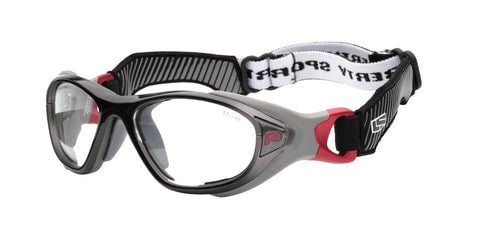
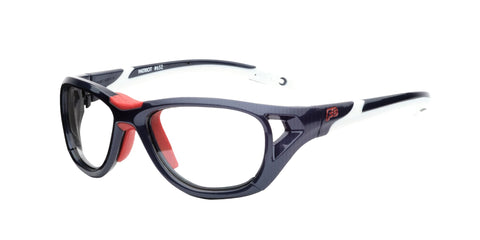
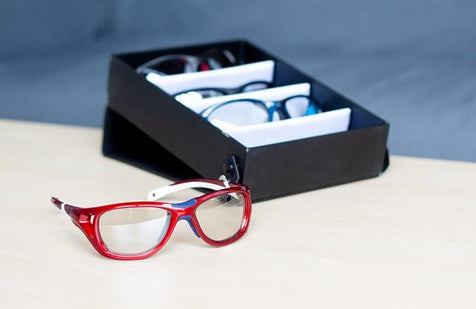
Some players prefer a glasses-style frame with temples. Others prefer the feel of a strap-style goggle. Start with that preference, then check the individual model's design and fit.
Ask yourself:
-
Do I prefer temples, a strap or a model with a different retention system?
-
Does the frame feel balanced, or am I already thinking about adjusting it?
-
Can I look around comfortably without the frame moving?
-
Does the size suit my face rather than simply match my age group?
A strap is not a substitute for the correct frame size. If a frame needs to be pulled uncomfortably tight to stay in place, compare another size or shape instead.
Choose a size for the player wearing it today
Youth size labels are a starting point. Two children of the same age may need different frames, and a teenager may fit some adult sizes better than some youth sizes.
Our frame sizing page can help you shortlist options. Before deciding, compare the candidate frame with eyewear that already fits comfortably. Note the model and measurements, but remember that different frame shapes can feel different even when the numbers are similar.
When trying a frame, check for slipping, pressure and movement as you change expression. If you are uncertain, use our frame-fit guidance or ask an Outfitter for help. Buying a loose frame for a child to grow into can leave you with a poor fit now.
Match lens choices to your playing conditions
Tell us where you play most often: an indoor gym, an outdoor court or both. That gives the conversation about lenses a useful starting point.
For indoor basketball, ask about the clear prescription options available for your chosen frame. If you also play outside, discuss the available sun or light-responsive options and their suitability for your conditions. Do not assume every lens option is offered with every frame or prescription.
If fogging or reflections are a recurring concern, compare the available coatings separately from the lens material. Our lens-coating guide explains what to ask about, including 2x2 ProCoat. A coating cannot correct a poorly fitting frame.
Compare the finished prescription price
A frame price is not always the price of a finished prescription pair. When comparing choices, look at the same configuration:
-
Frame and size.
-
Prescription lens design.
-
Lens material and any prescription limitations.
-
Selected coating or other upgrades.
-
Final price after any applicable offer.
This keeps a lower starting price from deciding the purchase before you have compared the options you actually need.
Try frames before committing to the fit
If you are choosing between shapes or sizes, explore Home Try-On. Use the trial to compare frame comfort and fit at home; follow the program's handling and return instructions.
Write down the model, size and what you liked about each option. “The bridge feels better on this one” is more useful than trying to remember which color you preferred after the kit is packed.
Have your prescription information ready
You will need a current eyeglasses prescription and your pupillary distance, or PD. Review our prescription instructions for submission options. If something is missing or difficult to read, ask for help before guessing at the numbers.
Frequently asked questions
Can kids wear prescription basketball goggles?
Prescription options are available for sports eyewear in youth sizes. The right choice depends on the child's prescription, the particular frame and its fit. Start with the basketball collection and confirm the details of the model you are considering.
Are goggles always better than sports glasses?
There is no single frame style that fits every player. Compare sport suitability, comfort and retention on the individual wearer rather than choosing by the word “goggle” alone.
Should I choose a larger size to allow for growth?
Choose a secure, comfortable fit for the player now. If you are between sizes, ask for fitting help rather than assuming the larger frame is the better investment.
Find your basketball fit
Shop prescription basketball glasses and goggles, or explore Home Try-On if you want to compare frames before choosing. Start with fit, confirm your lens options and build the pair around the way you play.