
Prescription Sunglasses for Golf: How to Choose Lenses and Fit

Choosing prescription sunglasses for golf involves two separate decisions: the vision correction you need and the way the lenses handle sunlight. A frame that stays comfortable while you address the ball matters too. Start with your current prescription, think about the conditions you play in, and compare the options available for the specific frame.
You may need to see across a fairway, look down at the ball, and read a scorecard during the same round. Explain those needs before choosing lenses rather than assuming the darkest tint or the most complex prescription design will be the best fit.
Start with the prescription design
Single Vision lenses correct one prescribed viewing range, such as distance. They can be appropriate when you need one main correction for play, but a distance pair does not automatically provide the near correction you may need to read small print.
Progressive lenses have areas for distance, intermediate, and near viewing. Because your line of sight changes when you look down toward the ball, consider your experience using progressives while golfing. Optics Outfitter recommends them for sports only when you are already accustomed to that design during the activity.
Selected OO sunwear listings also include Bifocal lenses, which combine distinct distance and near viewing areas. Ask about the selected model and your needs instead of assuming that option is available on every sports frame.
Compare the ways lenses handle light
| Lens option | What it does | What to check for golf |
|---|---|---|
| Non-polarized sunglass lenses | Use a sunglass tint to reduce brightness without a polarization filter. | Choose a tint that suits your usual light conditions and confirm its UV protection. |
| Polarized sunglass lenses | Reduce reflected glare, such as bright reflections from water. | Compare the view in your playing conditions and check any GPS or other display you use. |
| Light-responsive lenses | Change from clear to a darker tint outdoors in response to UV exposure. | Allow for the tint to change; do not expect an instant switch between bright and shaded areas. |
These are light-handling options, separate from Single Vision, Bifocal, or Progressive correction. A product listing may offer several options without supporting every possible combination. Check the current choices for your order.
Should golf sunglasses be polarized?
Polarization can be useful when reflected glare is distracting, including around water on a course. It is not a universal requirement for golf, and it is separate from UV protection. ZEISS explains how polarization filters reflected glare and why some digital displays can be harder to read through polarized lenses.
Compare what you can comfortably see when looking toward the fairway, down at the ball, and across a green. If you use an electronic scorecard or GPS display, include that in the check. Choose based on the complete viewing experience rather than a promise that one lens option improves every golfer's game.
What about lens color and UV protection?
Start with the amount of brightness you need to manage, then consider the appearance of the scene through the tint. Describe whether you usually play in full sun, changeable weather, or later in the day. If you already have a tint you enjoy for golf, tell the team what it is and why it works for you.
Do not use darkness as a shortcut for UV protection. The FDA recommends checking the UV-protection label; a darker lens does not necessarily block more UV than a lighter one. Confirm the protection of the lens option you select.
OO's Light-responsive lens information explains its clear-to-darker outdoor behavior. This is useful to consider for changing light, but it does not mean the lens changes instantly as you move between a sunny fairway and shade.
Check fit in your golf posture
A pair that feels comfortable while standing upright should also work when you address the ball. Try the glasses with the hat or visor you normally wear.
- Look down and make a slow practice swing. Check that the frame stays in position.
- Look ahead and to each side. Notice whether the frame edge interrupts a part of the view you use.
- Check the bridge and temple contact points for pressure, and see whether the frame touches your cheeks.
- If you use Progressive lenses, assess the actual viewing area you use when looking toward the ball.
Frame measurements help narrow the selection, but lens width alone is not the full width of the frame. Use our frame fit guide and discuss fit questions before ordering.
Golf-related frames at Optics Outfitter
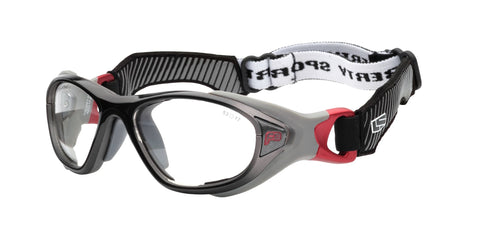
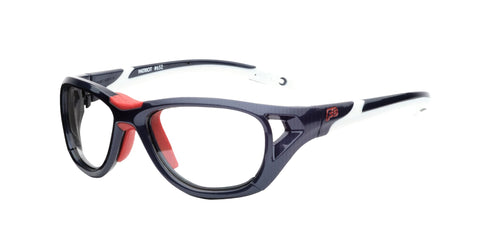
Sunrise is described by OO as a women's performance frame for golf and other outdoor use. Its listed measurements include a 59 mm lens width, 18 mm bridge, and 125 mm temples. The description identifies a head-hugging temple shape and sport grip at the temple tips.
Savannah is also described for golf, with a head-hugging shape. Its listed measurements include a 58 mm lens width, 20 mm bridge, and 125 mm temples. Those differences are useful fit information; they do not mean one frame is automatically better for every golfer.
Both current listings show prescription and light-handling choices. Confirm the combination for your prescription and chosen frame.
What to have ready when ordering
Have a current eyeglasses prescription, your pupillary distance, and a description of how you use your glasses on the course. Optics Outfitter does not fill expired eyeglasses prescriptions or contact lens prescriptions. You can upload the prescription while adding a product to your cart; see how to submit your prescription and PD. Contact Optics Outfitter for help choosing your combination.